Dear politicians – maybe we are looking in the wrong place!
Some years ago, I wrote an appeal to politicians about children and young people with autism, ADHD, anxiety, and other…

Some years ago, I wrote an appeal to politicians about children and young people with autism, ADHD, anxiety, and other…
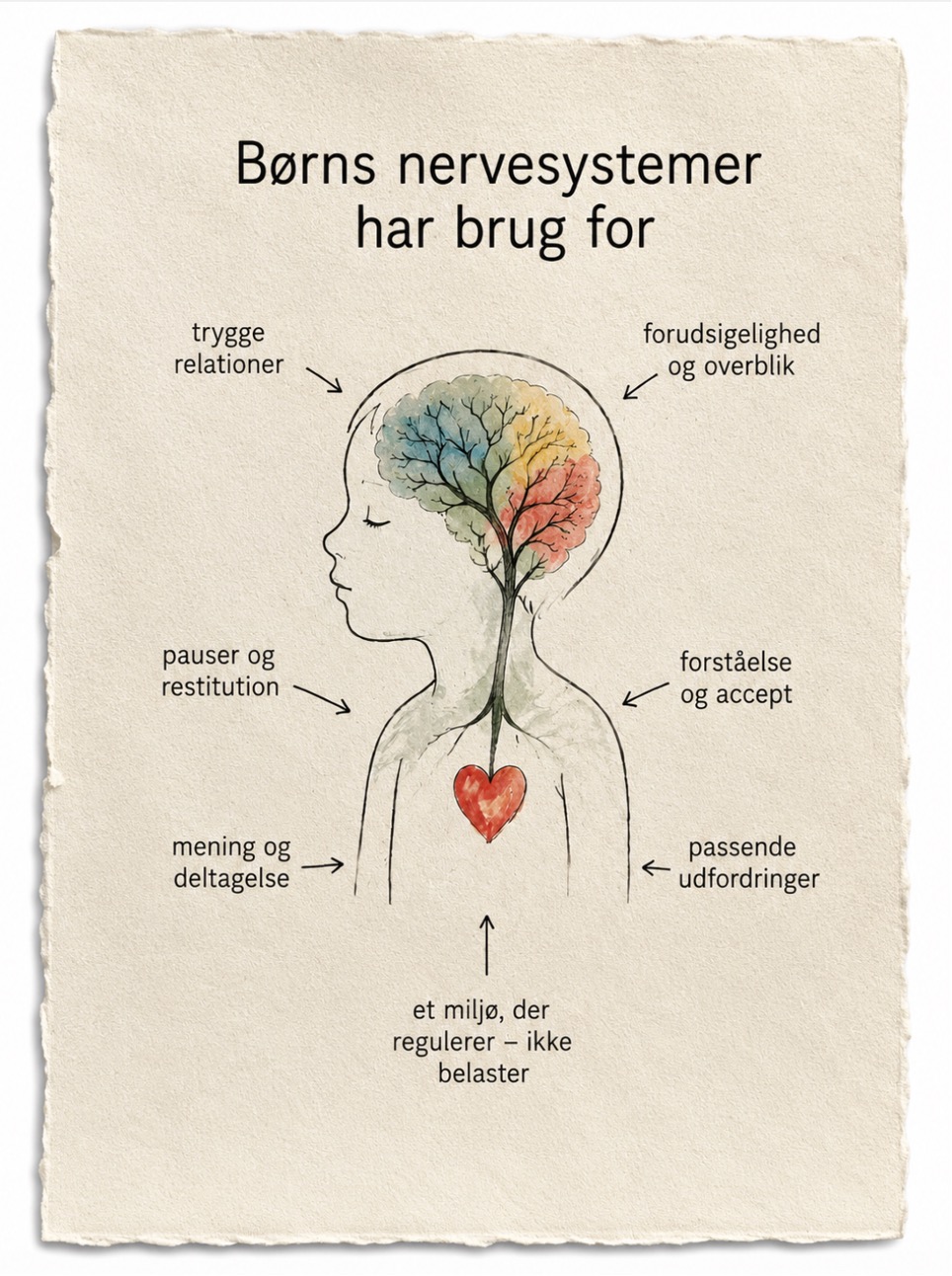
I am regularly asked: Can anyone explain why so many children can’t behave properly today? The short answer is: The frameworks have changed – radically. And our children feel it in their nervous system before we even notice it in the statistics.
Strength-based learning in safe and supportive environments
After 30 years in the field of educational psychology, first as a teacher and later as a psychologist specializing in autism and ADHD, two things stand brilliantly clear when it comes to neurodivergent students:
1. All children and young people must feel secure in their institutional everyday life with enough trained adults whom they can and dare to lean on, and who provide care.
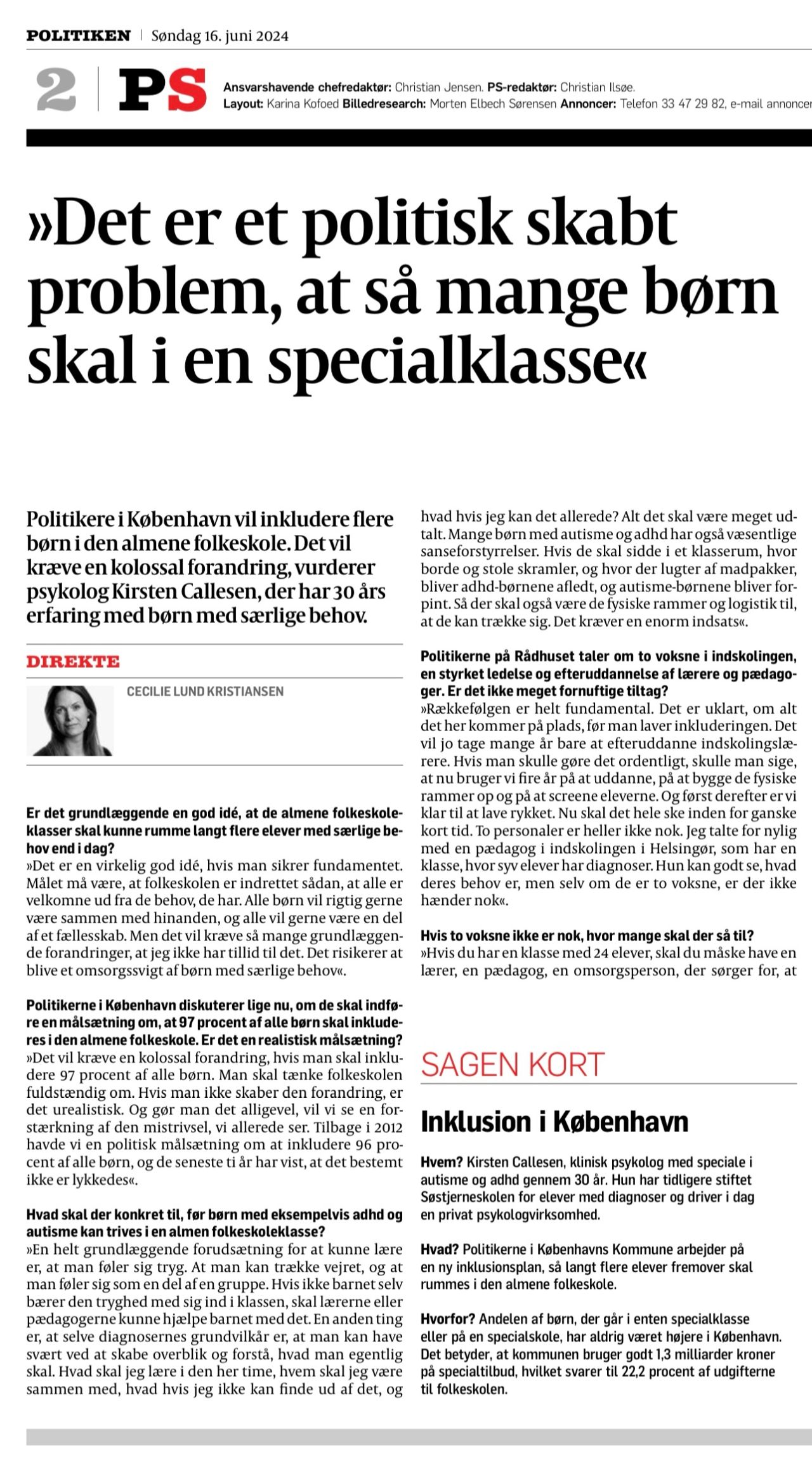
Interview with Politiken in today’s newspaper
I believe the care crisis for children and young people in Denmark has reached alarming heights due to years of underfunding and devaluation of the area
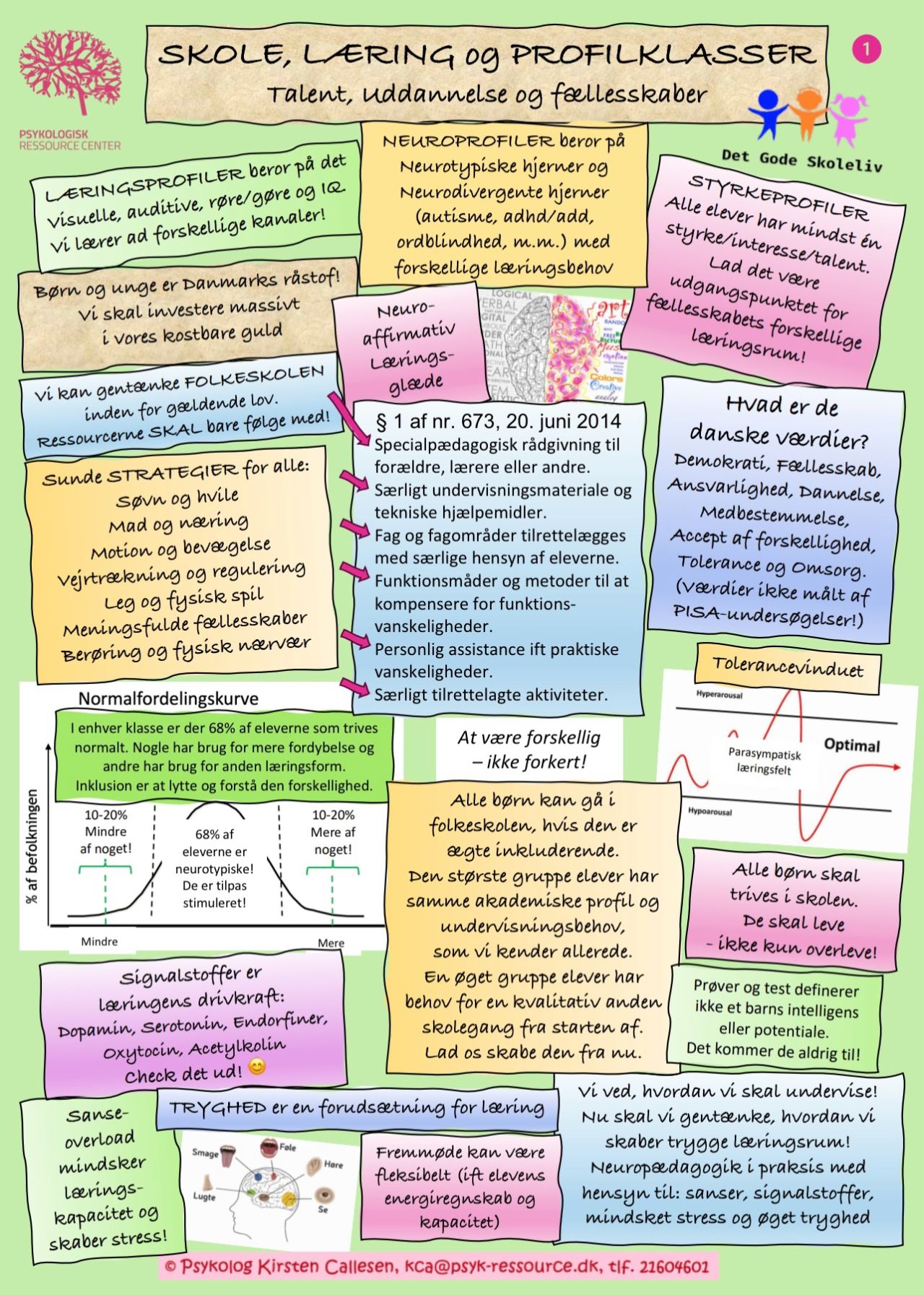
The neuroaffirmative approach is based on the understanding that people function differently – including neurologically. The idea stems from the international neurodiversity movement, which sociologist Judy Singer articulated in the 1990s with the concept of ‘neurodiversity’ – a movement away from seeing differences as flaws, and towards understanding them as variation. From a deficit-based perspective to a diversity-based perspective.