Some years ago, I wrote an appeal to politicians about children and young people with autism, ADHD, anxiety, and other forms of psychological vulnerability. At that time, my message was about them getting their safe childhood back. I have not changed that stance. On the contrary. But recent years of research and my own experiences as a psychologist have made me even more convinced that, as a society, we are often looking for explanations in the wrong places.
For more than 25 years, I have worked with children, young people, and adults with autism, ADHD, and severe comorbidity. I have met people who have needed extensive support throughout their lives, but I have also met people who have founded companies, conducted research, written books, developed new technology, and contributed perspectives that the rest of society has greatly benefited from. Therefore, I no longer doubt that autism and ADHD in themselves cannot explain the significant increase in distress, anxiety, depression, school absenteeism, and psychiatric diagnoses we see among children and young people today.
Autism and ADHD are neurodevelopmental conditions. They are part of human variation and have existed as long as humans have existed. If the diagnoses alone were the explanation, we should have seen the same developments 30 or 50 years ago. We have not. Therefore, we also need to ask what it is about modern society that causes more and more children and young people – both with and without diagnoses – to develop serious distress.
I do not believe that we are facing a generation of weaker children. I believe we are facing a generation of children whose nervous systems are exposed over extended periods to a level of stress that many of them are not developed to bear. We have designed a society with longer days outside the home, larger institutions, fewer adults per child, more noise, more transitions, higher academic expectations, constant evaluation, and ever-increasing social and digital pressure. For some children, these frameworks work fine. For others, they become a daily burden that the body never truly gets a chance to recover from.
This is precisely where modern brain research becomes interesting. When a child lives with stressors that exceed their current resources for an extended period, the body reacts exactly as it is designed to. The brain’s alarm system becomes more active, the autonomic nervous system is kept in a heightened state of alert, and the body’s stress system is activated with, among other things, increased production of stress hormones like cortisol and adrenaline. In the short term, this reaction is vital. It helps us survive. But if the stress continues week after week or month after month, without the child experiencing sufficient safety, recovery, and support from significant adults, the body begins to pay the price.
Today, we know from Jack Shonkoff, Bruce McEwen, Megan Gunnar, and Nadine Burke Harris, among others, that prolonged stress early in life can lead to what is internationally described as toxic stress. It is not about cortisol itself being “toxic.” It is about a persistently activated stress system over time potentially affecting brain development, the immune system, the hormonal system, and the body’s ability to regulate emotions and create calm. The brain becomes more aware of potential dangers, sensory impressions are experienced more intensely, and the child finds it harder to sort, gain an overview, and learn new things.
The interesting thing is that this can develop into a biologically self-reinforcing cycle. As the alarm system becomes more sensitive, it takes less and less for the child to experience the world as overwhelming. The increased stress keeps the stress system active, and the active stress system, in turn, makes the alarm system even more sensitive. The child gradually comes to live with the experience that the world is unpredictable, noisy, and difficult to navigate. For some, it manifests as anger, conflicts, and outwardly aggressive behavior. For others, it manifests as anxiety, school absenteeism, exhaustion, depression, or withdrawal. The symptoms appear different, but they can all be expressions of a nervous system that has long been trying to protect the child.
If the child also has autism or ADHD, the burden often becomes even greater. Not because the diagnosis is the problem, but because many already have a more sensitive or faster reacting nervous system. Prolonged stress can therefore amplify the difficulties the child already lives with. Conversely, we see again and again that when the environment becomes more understanding, more predictable, and more flexible, the burden decreases, and many children regain functions that otherwise seemed to be lost.
This is why I believe that as a society, we risk asking the wrong questions. We spend enormous resources asking what is wrong with the child, while far less often asking what it is about the child’s environment that burdens their nervous system. Diagnoses can be crucial for understanding a person and ensuring the right support, but they can never stand alone. Two children with the same diagnosis can develop very differently depending on the relationships, understanding, and communities they encounter throughout their upbringing.
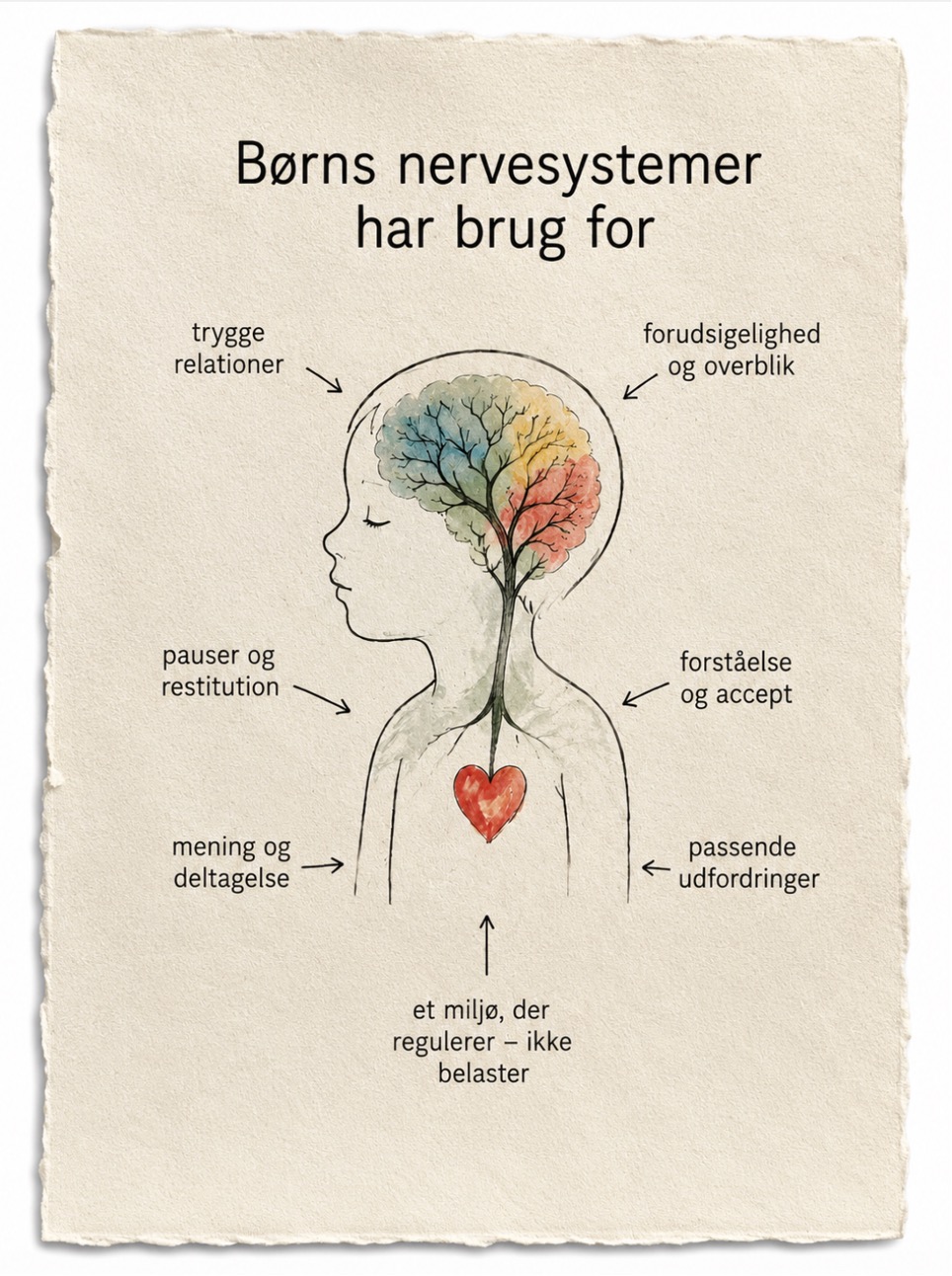
This does not mean that children should be shielded from all challenges. Resilience is important. But resilience is not developed through continuous stress. Resilience is developed through secure relationships, meaningful communities, and challenges that match the child’s developmental level. When children experience that they can master the world, their confidence in both themselves and others grows. When, on the other hand, they repeatedly experience failure, unpredictability, and lack of understanding, the body reacts with precisely the biological mechanisms that evolution has equipped us with.
Therefore, my appeal to politicians, decision-makers, and all the rest of us is the same as it was some years ago – but today it is based on even stronger professional knowledge. If we want to prevent anxiety, depression, school absenteeism, self-harm, and a continued explosive growth in child and adolescent psychiatry, we need to take a much greater interest in the environments our children grow up in. We must create institutions, schools, and communities where there is room for diversity, where relationships are prioritized as highly as achievements, and where children do not have to spend all their energy just on enduring.
Autism and ADHD are not society’s biggest problem. The biggest challenge arises when we design a society that burdens the nervous systems of more and more children so much that they lose the opportunity to thrive, learn, and develop. That responsibility does not lie with the children. It lies with us adults.