
When we talk about autism and ADHD from a neuroaffirmative perspective, we are not talking about something that needs to be fixed, but about ways of being human, where the brain’s control systems process sensory input, emotions, and attention in a different way. It registers faster, feels more deeply, and uses more energy to process what happens automatically for others.
It is rarely the autism or ADHD diagnosis itself that creates distress – it arises when the environment does not suit one’s brain’s way of functioning and one has been under pressure for too long.
Because when the environment matches the individual’s capacity, the ability to react in a healthy way is preserved, and stress reactions are reduced. When it doesn’t, restlessness, misunderstandings, and exhaustion appear. From within, it can feel like living in a system where everything hits at once. The neuroaffirmative approach is about understanding that. About seeing behavior as communication, not as wrongness.
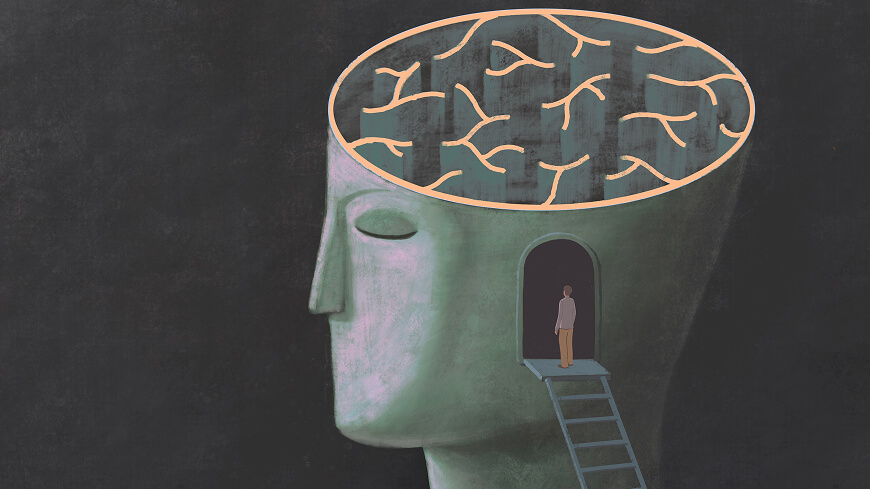
To be met neuroaffirmatively means that the environment understands how the brain works and allows for regulation before demands. That one does not have to explain oneself or apologize to be taken seriously.
When this happens, the feeling of being wrong disappears. One begins to feel that one belongs – not because one has changed, but because someone finally understands how one functions. Space is created to use energy for participation instead of defending and protecting oneself.
The moment someone truly understands you from within – that can change everything. When someone sees the connection between one’s reactions, sensory input, and capacity – and provides support where it makes sense for oneself, and not just where it looks right to others. Then not only calm, but dignity arises.
The neuroaffirmative approach is not a method, but an entire culture. A culture that is about understanding and meeting neurodivergent people respectfully, and where diversity is seen as a natural part of the community.
When neurodivergent children are described as ill-mannered instead of overloaded, the language use shows how much we still have to learn – but also where change can begin. For our words shape our understanding, and with more precise and respectful language, we can see children as regulated or pressured, not as well-behaved or ill-mannered.
The neuroaffirmative approach is about creating communities where diversity can be accommodated, and where both the environment and the person themselves contribute to the interaction working – so everyone can be themselves and find their own way of belonging.