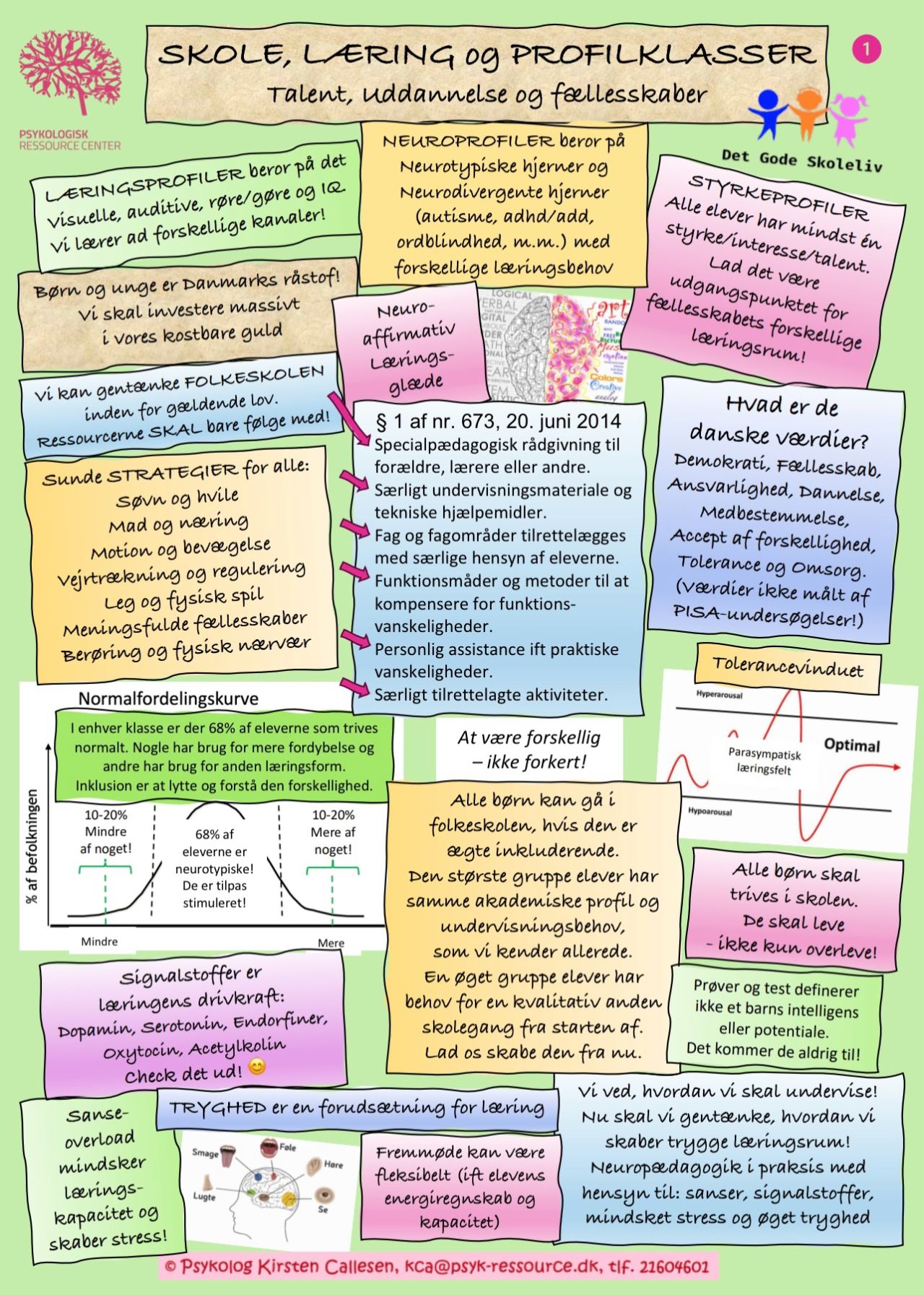
After 30 years in the field of educational psychology, first as a teacher and then as a psychologist specializing in autism and ADHD, two things are crystal clear when it comes to neurodivergent students:
1. All children and young people must feel safe in their institutional daily lives with enough trained adults whom they can and dare to lean on and who care for them.
2. Learning must be meaningful. Being taught subjects and topics without it creating inner meaning for the student is rarely about learning, but more about enduring school lessons.
Furthermore, the basic conditions for modern children’s upbringing have changed qualitatively in both homes and institutions, with attachment and self-regulation at stake.
– More hours in daycare institutions with fewer adults
– Less movement and play
– Internet access with massive gaming and online activities plus notifications interrupting one’s attention
– Reduced night sleep measured by the hours children sleep, which can lead to sleep disturbances
The discussion about the increased number of diagnosed children and young people with developmental disorders such as autism and ADHD creates frustration for both parents and professionals. Parents are accused of “shopping” for diagnoses when their children are struggling, and professionals are blamed for not knowing enough.
So what is the solution?
We need to rethink the public school system so that it includes all types of children regardless of neurotype. Real inclusion is based on a child’s profile and offers precisely the framework in which the child can function.
We must stop believing that all children fit into a neurotypical classroom environment where they must conform until they implode or become outwardly aggressive – and when they don’t fit in, they are still pressured until they become stress-sick from it.
If politicians want the public school system to be for everyone, the focus must be on how broadly it should offer learning and adapt to the many neurotypes, rather than neurodivergent students being forced into a framework in which they cannot function.
Over the past school year, I have collaborated with schools and gymnasiums across the country. I have met many passionate individuals among teachers, educators, and school leaders in understanding and helping students with neurodivergent profiles.
The way forward is to think about strength-based learning in safe environments. When children end up with functional impairments, stress reactions, and an endless number of diagnoses, the solution is still for the school and the system to take into account the individual child’s capacity so that the child can thrive again.
But often with 3-4 school changes and often twice as many years of mental distress. What a loss for the individual child’s identity!
Let the school be sensitive to each child from the beginning and invest in as many ordinary offerings and learning spaces as are necessary for all students to tolerate and thrive in school regardless of neuroprofile.
No child should experience involuntary school absence due to a lack of understanding of their neuroprofile, sensory sensitivity, or reduced ability to create meaning where it does not exist.